How It Changed the Way I See Myself
I still remember the exact moment I clicked “book now.” My heart was racing, partly from excitement and partly because I knew what it meant. This wasn’t just another holiday. For the first time, I was actually choosing to travel somewhere completely on my own.
Until then, I’d spent most of my holidays with friends, partners or family. We would find dates that worked for everyone, debate where to go and eventually compromise on what we wanted to do. This time there was none of that. There was nobody else’s schedule to consider and nobody else’s preferences to work around. It was just me deciding where I wanted to go and actually doing it.
That freedom was exciting, but it was also pretty intimidating.
For weeks, I went back and forth. I told myself I could always book later, that maybe it wasn’t the right time or that I should save the money for something else. Deep down, though, I knew those were mostly excuses. At some point, waiting for the perfect moment just becomes another way of avoiding something you’re nervous about.
Eventually, I booked the trip.
The Quiet Fears Before the Leap
Looking back, my hesitation wasn’t really about the money, the destination or the timing. It was mostly about me and how I would feel once I got there.
Would I meet anyone I actually connected with? Would I feel awkward arriving alone while everyone else already seemed to know each other? Would I be the slowest person in the surf lessons? Would I spend the whole week wondering whether I belonged there?
It’s funny how quickly confidence can disappear when you put yourself into a completely unfamiliar situation. At home, you know your people, your routines and your surroundings. Take all of that away and suddenly those small insecurities you thought you had dealt with start showing up again.
For me, there was another part to it as well. It had to do with the people I was leaving behind.
When People Only See the “Old You”
I had changed quite a lot in the years leading up to that trip. I’d worked on myself physically and mentally, become more disciplined and started taking chances I probably would have avoided before. The problem was that the people around me had known me for years.
When someone has known you for a long time, they don’t only see the person standing in front of them today. They also remember the shy version of you, the hesitant version and the person who preferred staying safely inside their comfort zone.
Even when you change, other people’s perception of you can take a while to catch up. Sometimes it never completely does.
I think that was part of the reason I wanted to go somewhere alone. I wanted to spend some time in a place where nobody knew anything about me. There would be no old stories and no expectations about how I normally behaved. People would simply meet the person who showed up that day.
I didn’t want to become somebody different. I just wanted to find out what I was like without all that history around me.
Why a Surf Trip Felt Like the Right Place to Start
I could have travelled anywhere alone, but there was something about a surf trip that made sense to me. Surfing is active, social and incredibly humbling at the same time. You can’t really pretend to be better than you are because the ocean figures that out pretty quickly.
You learn by showing up, falling, trying again and slowly getting more comfortable with something that initially feels completely unfamiliar. If you’re new to it, knowing what you can actually expect from your first week surfing takes away some of the pressure, but there is still something exciting about not knowing exactly how you’re going to handle it until you get into the water.
More importantly for me, a surf camp came with a ready-made community. People arrive for similar reasons. They want to surf, meet people, spend time outside and do something different from their normal lives. It isn’t like checking into a hotel where you can easily spend a week barely speaking to anyone. At a surf camp, there are natural opportunities to get to know people from the moment you arrive.
I still had questions, of course. What if everyone already knew each other? What if they were all much younger or older than me? What if I simply didn’t connect with the group?
There was no way to know for sure without going.
The Variables You Can’t Fully Control
When you book a trip like this alone, there are a lot of little unknowns. I wondered whether I would feel comfortable sharing accommodation or whether I should book a private room. I thought about the journey, how easy it would be to get there and, probably more than anything else, what the social atmosphere would actually be like once I arrived.
The accommodation question seemed small at first, but when you’re travelling alone it can change the experience quite a bit. There are good arguments for both shared and private rooms at a surf camp, and at the time I wasn’t sure which option would make me feel most comfortable.
All of these things were unknown to me because I had never done a trip like this before. I had no frame of reference. You can look at photos, read reviews and scroll through social media, but eventually you reach a point where you just have to trust that you’ll figure things out when you get there.
This is one of the reasons why, in my own surf camp today, I put so much emphasis on transparency. We show our spaces exactly as they are and try to give guests a realistic idea of the crowd, schedule and atmosphere. I remember what it felt like to be on the other side, looking at a website and wondering whether I was making the right choice.
Landing in a New Life, even only for a Week
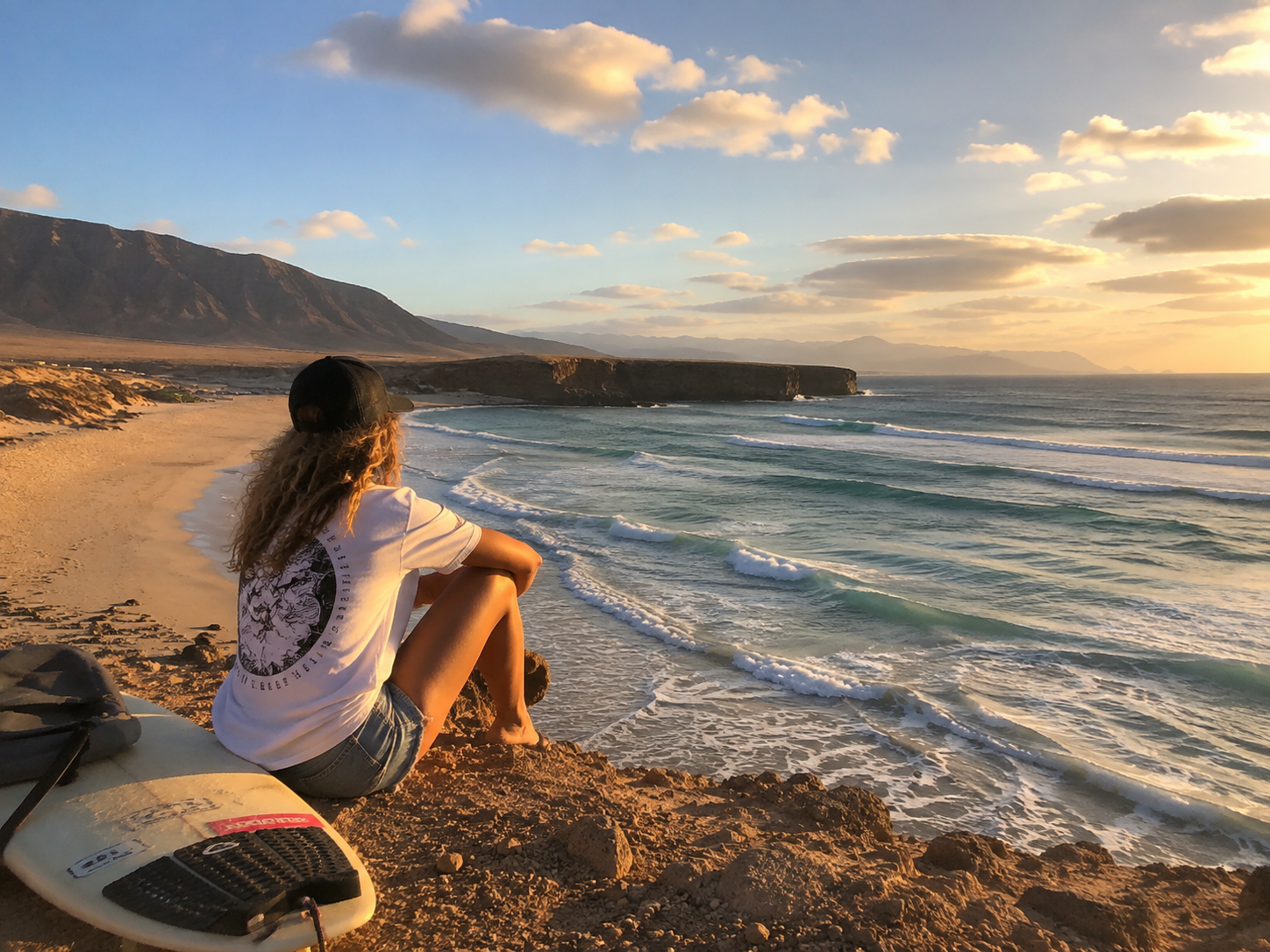
From the moment I arrived, something felt different. The air was warm, the sky was impossibly blue and the Atlantic was right there in front of me.
What surprised me most, though, was how quickly the social side became easier. The people I met didn’t know anything about my past. They didn’t know the versions of me that had second-guessed decisions or hesitated when something felt uncomfortable. They only knew the person who had arrived there on his own, ready to surf and meet people.
That felt strangely freeing.
I noticed myself speaking more confidently in conversations, and I even led group activities without overthinking it. I laughed more easily and worried less about how I came across. I wasn’t trying to become a different person. If anything, it felt more like I had stopped worrying about which version of myself everyone expected to see.
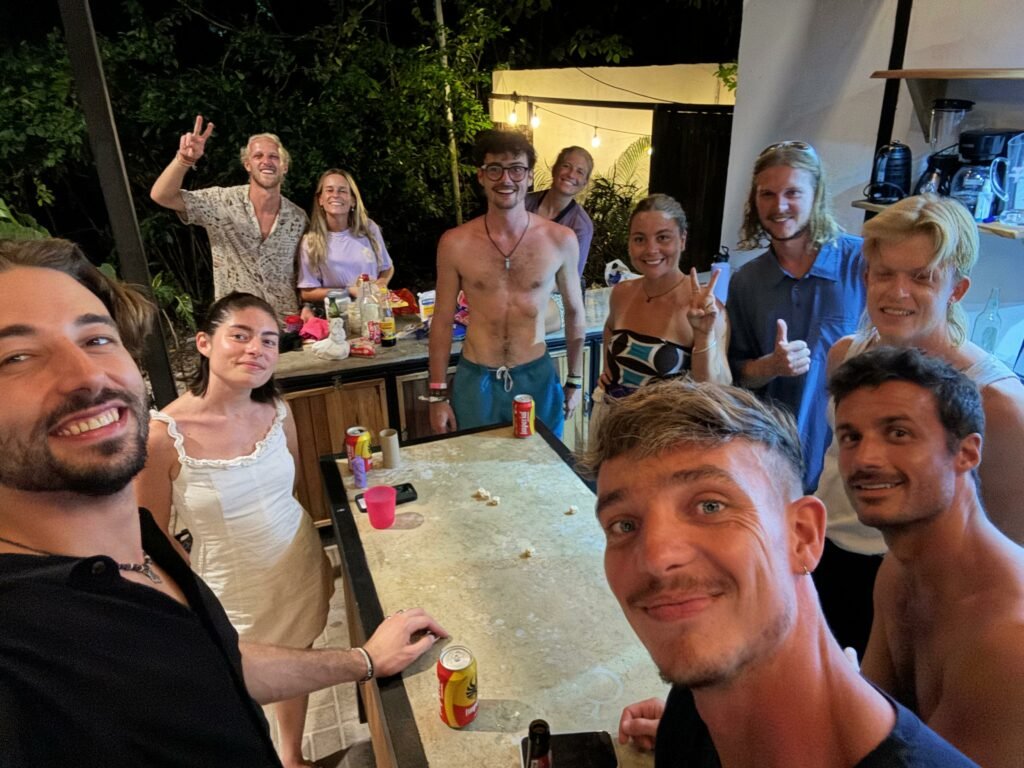
That social side is something I hadn’t fully understood before going. Making friends as an adult can be weirdly hard, especially when normal life doesn’t regularly put you in situations where you spend several days with completely new people. At a surf camp, that happens naturally. You surf together, eat together and gradually stop feeling like strangers.
The Transformative Power of New Contexts
We underestimate how much our environment shapes the way we behave. At home, surrounded by people who have known us for years, it’s easy to fall back into familiar routines and old patterns. When you put yourself somewhere completely new, around people who only know the person they see today, you get the chance to experience yourself differently.
That’s what happened to me during that trip. Every surf session, shared meal and sunset conversation on the beach made life feel a little lighter and more spontaneous. I was spending less time thinking about what I should be doing and more time paying attention to what was actually happening around me.
Surfing played a big part in that. There’s something useful about doing an activity where you can’t control very much beyond your own decisions. The conditions change, waves don’t always behave the way you want them to, and some sessions simply go better than others. A lot of what surfing teaches you about life starts with getting comfortable with that fact.
Somewhere during those days, I also started feeling that this probably wasn’t going to be a one-time trip for me.
The Pull You Can’t Ignore
There’s a book I read on that trip that talked about the “soul of the world” and the idea that when something genuinely calls to you, it’s worth paying attention to. That thought stayed with me.
The trip had planted something. Surfing was obviously part of it, but it wasn’t only about being in the water. I had become fascinated by what happens when you bring a group of people together, take them away from their normal routines and give them a week filled with surfing, shared meals, conversations and new experiences.
A couple of years later, that feeling eventually led me to start my own surf camp. The idea didn’t appear fully formed during that first trip, and I certainly didn’t come home with a business plan. But looking back now, the seed was already there.
That first week showed me that a surf trip could be about much more than simply learning to surf
Why I Think Everyone Should Try This Once
I’m not saying everyone should quit their job and open a surf camp. I do think, however, that there’s something valuable about going somewhere on your own at least once, especially somewhere nobody knows your history.
Travelling alone forces you to make your own decisions, talk to people you might otherwise never meet and become comfortable with a certain amount of uncertainty. A surf camp made that easier for me because I was technically travelling solo without spending the whole trip alone. There was already a place to stay, something to do every day and a group of people around me.
For me, that was my first solo surf trip. For someone else, it could be something completely different. The destination or activity matters less than giving yourself the chance to step outside your normal environment and see what happens.
I spent weeks finding reasons not to book that trip. In the end, clicking that button was the easy part.
Actually going was what changed things.