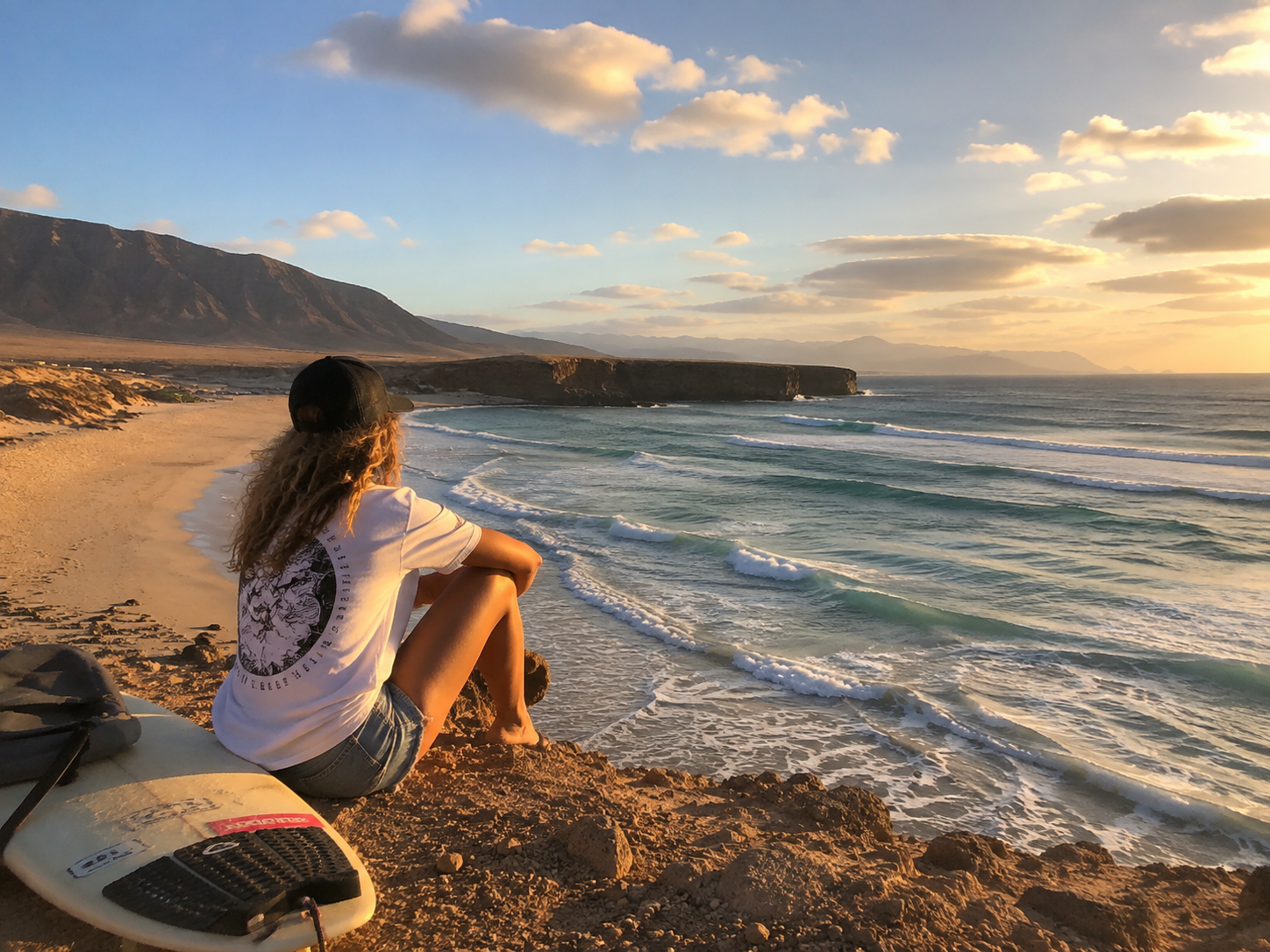

One of the first things people ask before their first surf lesson isn’t usually about the waves. It’s whether they’re going to be any good at it.
After spending time around beginner surf lessons, I’ve realised that’s a much more common worry than wipeouts. Most people are simply nervous about looking out of place. Standing on the beach in a brand-new wetsuit, carrying a surfboard that suddenly feels much bigger than expected, it’s easy to assume everyone else already knows what they’re doing.
The funny thing is that, once the lesson begins, you quickly realise almost everyone is feeling exactly the same. Someone struggles to carry their board, someone else forgets how the leash works, and paddling in a straight line turns out to be much harder than anyone imagined. Before long, everyone is laughing, helping each other, and realising that nobody is there to judge anyone else.
If you’re thinking about trying beginner surfing in Fuerteventura, that’s probably the most reassuring thing to know. Nobody arrives expecting you to surf perfectly. Everyone starts somewhere, and those first slightly awkward moments are simply part of learning something new.
So, Is Fuerteventura Good for Beginners?
So, is Fuerteventura a good place to learn how to surf? I certainly think so, but probably not for the reason most people expect.
It’s not because every beach has small, gentle waves or because learning to surf suddenly becomes easy the moment you arrive on the island. In fact, the Atlantic can be unpredictable, and conditions change from one day to the next. What makes Fuerteventura such a great place for beginners is the variety of surf spots available.
The island has beaches facing different directions, each responding differently to the swell, wind, and tide. That means when one beach is too big or too challenging, another may offer much friendlier conditions for people who are just starting out.
That’s why local surf schools spend so much time checking the forecast before every lesson. The goal isn’t to find the biggest waves or the most famous surf spot. It’s to find the beach that offers the safest and most enjoyable conditions for the people heading into the water that day. For beginners, that flexibility makes a huge difference.
Your First Surf Lesson Probably Won't Go How You Imagine
I think a lot of people imagine their first surf lesson will go one of two ways. Either they’ll stand up on every wave and wonder why they didn’t start surfing years ago, or they’ll spend the entire lesson falling into the water without making any progress at all.
In reality, most first lessons end up somewhere comfortably in between. You might stand up once or twice, even if it’s only for a few seconds before falling back into the water. There will almost certainly be plenty of wipeouts along the way, but that’s simply part of learning. Everyone in the group is figuring things out together, and before long those little mistakes become something to laugh about rather than worry over.
Looking back, I don’t think many people remember exactly how many waves they caught during their first lesson. What stays with them is the feeling of standing up for the first time, however briefly, hearing everyone cheering from the beach, or laughing after an unexpected wipeout. Those are the moments that tend to stick with you long after the lesson is over, and they’re often the reason people decide they want to keep surfing.
The Ocean Doesn't Care That You're a Beginner
One of the first things you realise when you start surfing is that the ocean doesn’t treat beginners any differently. The waves don’t slow down because it’s your first lesson, and they don’t become easier simply because you’re still learning. At first, that can feel a little intimidating.
After a while, though, I found it strangely reassuring. Nobody is expected to control the ocean, no matter how much experience they have. Whether it’s your first session or your hundredth, every surfer is simply trying to read the conditions, choose the right moment, and work with whatever the sea offers that day.
I think that’s one of the reasons surfing takes away so much of the pressure people put on themselves. Instead of worrying about getting everything right, you begin to focus on paying attention to the waves, listening to your instructor, and enjoying the process of learning. Looking back, that change in mindset was just as important as anything I learned about standing up on a board.
Progress Looks Different Than You Think
When most people think about improving at surfing, they picture standing up and riding longer waves. While that’s certainly part of it, progress often looks much smaller than that, especially in the beginning.
Some days it’s paddling in the right direction or remembering where to look instead of staring down at your feet. Other days it’s simply feeling a little more comfortable in the water than you did during your last lesson. Even making it through a session with a little more confidence than before can feel like a real achievement.
Looking back, I think that’s one of the reasons surfing is so rewarding. It isn’t built around one big breakthrough, but around lots of small moments that gradually add up. You don’t always notice yourself improving from one session to the next, but after a while you realise you’re catching more waves, feeling more relaxed, and doing things that once seemed impossible without really thinking about them.
Why So Many People Learn to Surf in Fuerteventura
There’s another reason so many people enjoy learning to surf in Fuerteventura, and it has very little to do with the surfing itself.
Once the lesson is over, the day doesn’t simply end. You head back together for lunch, sit by the pool talking about the wave you almost caught, or jump in the car to explore another corner of the island. Before long, the conversation drifts away from surfing and onto travel stories, favourite places, future plans, or where everyone should go for dinner that evening.
It’s something we see almost every week. People arrive as strangers, spend a few hours sharing the experience of learning to surf, and then carry on spending time together long after they’ve left the beach. Somewhere between the surf sessions, shared meals, and evenings exploring Fuerteventura, new friendships begin to form without anyone really trying.
Looking back, I think that’s one of the things that makes a surf holiday so memorable. You come for the waves, but it’s often the people you meet and the moments you share away from the water that stay with you long after you’ve returned home.
You Don't Need to Be Fit. You Just Need to Be Willing.
One of the questions we hear most often is whether you need to get fit before joining a beginner surf camp. It’s a fair question, especially if you’ve never surfed before.
The honest answer is that you don’t need to arrive in peak physical condition. Surfing is definitely a workout, and there’s a good chance your shoulders and arms will feel muscles you didn’t know you had after your first lesson. But that’s completely normal, and it’s something almost everyone experiences.
Beginner surf lessons aren’t designed for experienced athletes. They’re designed for people who are learning for the first time. You’ll paddle, take breaks when you need them, laugh at the inevitable wipeouts, and head back into the water to try again. Before long, that rhythm starts to feel surprisingly natural.
The most important thing isn’t how fit you are before you arrive. It’s being willing to give something new a try, take your time, and enjoy the experience. The rest tends to come with each session you spend in the water.
Can You Learn to Surf in One Week?
One of the questions we hear most often is whether it’s really possible to learn to surf in a week. The answer depends on what you expect from those first few days in the water.
Nobody becomes an expert in a week, and that’s never the goal. Learning to surf takes time, just like learning any new skill. What you can expect is to catch your first waves, understand the basics, and begin to feel much more comfortable in the ocean than you did when you arrived.
For many people, that’s exactly what makes a surf holiday so rewarding. You leave with a solid foundation to keep building on, but you also leave with the confidence that surfing is something you can continue enjoying long after you’ve returned home.
Looking back, I don’t think that’s what people remember most anyway. They remember standing up for the first time, catching a wave they didn’t think they could, and realising they were capable of something that had seemed a little intimidating only a few days earlier. That’s a feeling that tends to stay with you long after the holiday is over.
Why a Surf Camp Makes Everything Easier
Of course, you can learn a lot from a single surf lesson, and for some people that’s the perfect way to get started. But spending a week at a surf camp offers something that’s much harder to recreate in just one afternoon.
Instead of starting from scratch every time, you build on what you learned the day before. The movements begin to feel more familiar, the advice from your instructors starts to make sense, and little by little you notice yourself becoming more comfortable in the water. Often, the biggest improvements happen without you even realising it.
There are also plenty of practical advantages. You don’t have to spend your mornings trying to understand the forecast or wondering which beach is best for your level. Your instructors check the conditions, choose the right surf spot, and take care of the planning, so you can simply focus on enjoying your time in the ocean.
Looking back, I think that’s one of the reasons so many people enjoy staying at a surf camp. The surfing quickly becomes part of your daily routine, and before long you’re thinking less about whether you’ll stand up and more about looking forward to the next session. By the end of the week, it’s often surprising how much you’ve learned, and how difficult it feels to leave.
A Little Kyuka Reminder
Every week we meet people who tell us they’ve always wanted to try surfing but weren’t sure if they’d be any good at it. It’s a completely normal concern, especially if you’ve never stood on a surfboard before.
The truth is that nobody really knows how they’ll get on until they give it a try. Every beginner starts in exactly the same place, and nobody expects you to catch every wave or get everything right during your first lesson. Learning to surf is simply a process of spending time in the water, trying again after each wipeout, and gradually becoming more comfortable with the ocean.
That’s something we love seeing at Kyuka. People often arrive feeling a little nervous, but after a few days those worries usually fade into the background. The focus shifts from wondering whether you’re good enough to enjoying each session, celebrating the small improvements, and looking forward to getting back in the water the next day.
For me, that’s one of the reasons Fuerteventura is such a special place to learn to surf. The variety of waves means there’s almost always a suitable spot for beginners, the island encourages you to slow down, and the people you meet along the way often become just as memorable as the surfing itself.
By the end of the week, most people aren’t talking about how many waves they caught. They’re talking about the first one they stood up on, the laughs they shared in the water, and the friends they made along the way. Those are usually the memories that stay with you long after you’ve left the island.