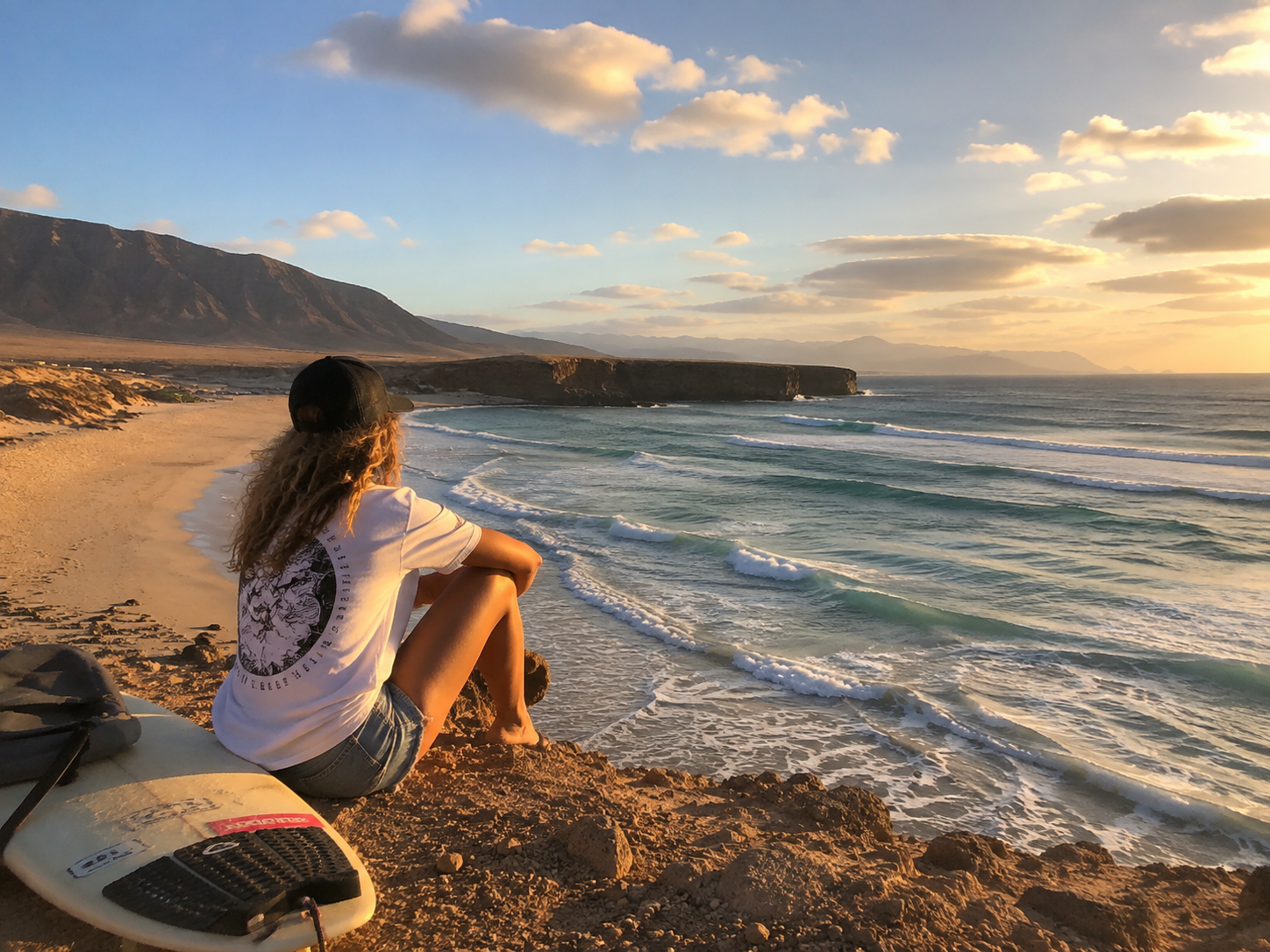

If you’re planning a surf trip to the Canary Islands, you’re probably wondering when the best time to surf in Fuerteventura actually is. The good news is that there isn’t just one short surf season here. Thanks to the island’s mild climate, exposure to Atlantic swells and variety of surf spots, you can find waves throughout the year.
That doesn’t mean every month feels the same, though. The best time to visit depends on your surf level, the kind of waves you’re looking for and what you want from the rest of your holiday. An experienced surfer chasing stronger Atlantic swells will probably look at the year very differently from someone who has never stood on a surfboard before. Where you stay can make a difference too, as we explain in our North vs South Fuerteventura comparison. Fuerteventura is a long island, and the experience can be quite different depending on which part you choose as your base.
When Is the Best Time to Surf in Fuerteventura?
Generally, autumn and winter bring more consistent North Atlantic swell, which is one reason experienced surfers are drawn to Fuerteventura during this part of the year. Spring and summer tend to offer a different experience, with conditions that can be more approachable for beginners depending on the day and the surf spot.
The important thing to understand is that Fuerteventura doesn’t have one beach that works perfectly every day. Some of Fuerteventura’s best-known surf spots face different directions, meaning swell, wind and tide can completely change what is happening from one location to another. A beach that looks quiet one day can feel very different the next, which is part of what makes surfing here so interesting.
Surfing Fuerteventura in Winter: December to February
Winter is one of the most exciting periods of the year for surfing in Fuerteventura. North Atlantic swell activity can bring powerful and consistent waves, particularly around the north of the island, creating plenty of opportunities for intermediate and experienced surfers.
For beginners, seeing a big winter forecast doesn’t automatically mean you have to stay out of the water. One of the reasons Fuerteventura can be a great place for beginner surfers is the variety of locations available around the island. Conditions can differ considerably between beaches, and a good surf school won’t simply take everyone to the same spot regardless of what the ocean is doing.
Swell direction, wind, tide and the ability of the group all play a role in deciding where to surf. That local knowledge becomes especially valuable during the more powerful months of the year, allowing beginners to learn in suitable conditions while more experienced surfers can make the most of the stronger winter swells.
Surfing Fuerteventura in Spring: March to May
Spring is a transition period between the stronger winter swell season and the summer months. Atlantic swells can still arrive, but the overall pattern gradually begins to change, giving surfers a mixture of conditions rather than one predictable type of wave every day.
For progressing surfers, that variety can be a good thing. You may get the chance to experience different conditions while continuing to work on your technique, without necessarily coming specifically to chase the larger winter swells.
Spring is also a great time to experience more of Fuerteventura outside the water. The climate makes it easy to combine surf sessions with exploring the island, hiking, visiting beaches or spending time in the villages around the north. Kyuka is based in Lajares, where there are plenty of things to do between surf sessions, from walking around the volcanoes to grabbing a coffee, visiting the local market or catching some live music.
For beginners, progressing surfers and groups with different experience levels, spring can offer a nice balance between surfing and discovering the rest of the island.
Surfing Fuerteventura in Summer: June to August
Summer is a popular time to visit Fuerteventura, especially for people combining their first experience of surfing with a sunny island holiday. The north coast can receive smaller swell than during the winter months, although conditions still vary from day to day and between different surf spots.
For someone learning to surf, smaller waves aren’t necessarily a disadvantage. In fact, manageable conditions can give you more space to focus on the basics, including paddling, positioning, standing up and slowly beginning to understand how the ocean works. When you know what to expect from your first week surfing, you quickly realise that progress isn’t about finding the biggest possible waves. It’s about getting time in the water and gradually becoming more comfortable.
Wind becomes an important factor during the summer months, which is another reason why choosing the right location and time of day matters. Looking at the weather from your accommodation doesn’t always tell you what the surf will be like somewhere else on the island, and conditions can change more than first-time visitors expect.
For first-time surfers and people who want to combine surfing with a summer holiday, this can be a really enjoyable time to experience Fuerteventura.
Surfing Fuerteventura in Autumn: September to November
Autumn is when things start to become particularly interesting again. As North Atlantic swell activity begins to increase, Fuerteventura can see more consistent waves while temperatures remain pleasantly warm.
For surfers who already understand the basics, this period can offer opportunities to progress into more challenging conditions. At the same time, autumn isn’t reserved for experienced surfers. Beginners can still find suitable waves when sessions are planned around the conditions of the day.
That balance makes autumn attractive to a wide range of surfers. You can arrive wanting to improve, spend plenty of time in the water and still enjoy the relaxed island atmosphere that makes Fuerteventura such an easy place to stay a little longer than originally planned.
So, What Is the Best Month to Surf in Fuerteventura?
There isn’t one perfect month that works for every surfer. The better question is what kind of surfing experience you want to have.
If you’re a beginner, you don’t need to plan your holiday around the biggest swells of the year. More manageable waves can give you a much better environment for building confidence, learning good technique and actually enjoying your time in the water. If you’re already an intermediate or advanced surfer, autumn and winter generally offer more potential for consistent Atlantic swell and more challenging conditions.
Even then, surfing is never completely predictable. Two weeks in the same month can look very different, and conditions can change significantly within a few days. That unpredictability is part of surfing, and it’s also why knowing the island helps.
Is Fuerteventura a Good Place for Your First Surf Trip?
You definitely don’t need years of experience before coming to Fuerteventura. Plenty of people arrive here having never touched a surfboard before, and learning something completely new is part of the experience.
It can feel intimidating at first, especially when you’re surrounded by people who seem to know exactly what they’re doing. But you don’t have to be good at something to enjoy it. Every surfer has been a beginner at some point, and sometimes enjoying the process matters much more than immediately being good at it.
For many people, staying at a surf camp makes that first experience easier too. Instead of trying to figure everything out alone, you’re surrounded by other people who came to surf, improve, meet people and experience the island. That combination of surfing and community is a big part of why people choose a surf camp rather than simply booking accommodation and renting a board on their own.
Why Local Surf Knowledge Makes a Difference
Finding good waves involves much more than checking the swell height on your phone. Wind direction, swell direction, wave period, tide and your surfing ability all influence which location makes sense on a particular day.
At Kyuka Surf, we look at the conditions and choose where to surf based on what the ocean is doing and the level of the people in the group. Some days that means changing plans, driving somewhere different or waiting for conditions that make more sense. That flexibility is simply part of surfing on an island with so many different options.
It also means you don’t have to spend your holiday trying to decode forecasts and wondering whether you’ve driven to the wrong beach. You can focus on getting into the water, improving your surfing and enjoying Fuerteventura.
Ready to Surf in Fuerteventura?
Whether you’re planning your first surf trip or returning to Fuerteventura in search of more waves, there really isn’t one bad season to come. Winter and autumn generally bring more consistent Atlantic swell, while spring and summer can provide plenty of opportunities for beginners and surfers who want to combine time in the water with exploring the island.
What matters most is finding conditions that suit your level and approaching the ocean as it is that day rather than expecting it to follow a calendar. That’s part of what keeps surfing interesting: no two days are exactly the same.
If Fuerteventura sounds like the place for your next surf trip, you can book your stay with Kyuka Surf and experience the island, the waves and the surf-camp life for yourself.
See you in Fuerteventura, and hopefully in the water.